Finding out I had NTM lung disease turned my world upside down. But long after the shock had settled, the questions still hadn’t.
Why did I get this?
How did it get so bad?
Was there something I missed?
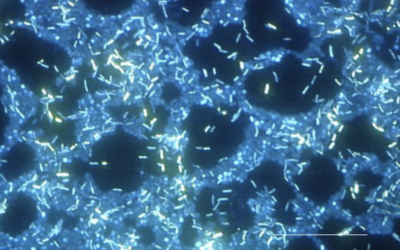
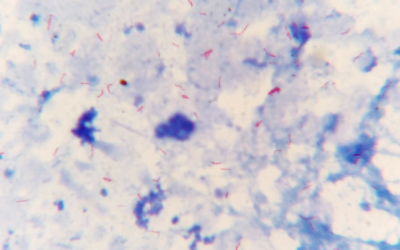
Non-tuberculous mycobacteria (NTM) are part of our everyday environment, and there are more than 200 species. They live in soil. In water. In plumbing systems. In showerheads. We inhale or ingest them during our everyday lives. But they’re not all bad – only some of them can hurt us.
Everyone is exposed.
So why did they decide to make a home in my lungs?
I wasn’t someone who was unwell. I loved distance running, I swam, I gardened, I travelled. I studied overseas. I was in my 50s when I was first diagnosed – not elderly, not frail, not a sickly person. I had strong lungs, had never smoked.
Statistics show patterns, but they don’t give certainty. Globally, many patients are over 60, though plenty are younger. Here in Aotearoa New Zealand, many in our patient community are women. In other countries, the gender balance looks different again. Many people have underlying lung conditions. Some don’t.
There are shared traits researchers have noticed – often patients were previously fit, slim, mostly described as ‘healthy’ before diagnosis.
That word, healthy – it feels complicated now.
NTM bacteria are related to the organism that causes tuberculosis, but they behave differently. TB spreads from person to person. NTM does not. You didn’t catch this from someone. You can’t give it to someone.
That matters.
I do have an autoimmune disease called Graves’ disease. I had radioactive iodine treatment, so there was a period when my immune system may not have been at its strongest. But plenty of people go through immune-suppressing treatments and never develop NTM disease.
Researchers around the world are working hard to understand the ‘why’. Centres in the U.S. and Europe are testing patients for subtle cystic fibrosis gene variants. Others are looking at prior TB exposure, immune signalling pathways, structural airway differences. There are risk factors. There are patterns.
But there is no single, clear answer.
There is no neat explanation that ties it all up and says: this is exactly why it happened to you.
And that was hard for me to accept.
How Did It Take Hold?
Another question that lingered for me was: how did the bacteria get so established before anyone realised what it was?
The problem for our doctors is, NTM symptoms are not specific. They overlap with so many other things.
For years, I was treated for recurrent ‘bronchitis’. I coughed constantly. I produced small amounts of sputum. I got better. Then worse. Then better again.
I was exhausted – but wasn’t that menopause?
I had night sweats – but no significant fever.
I became short of breath – maybe I was just less fit?
I lost weight – I certainly wasn’t trying to.
I kept telling doctors something wasn’t right. I also kept explaining it away to myself – thinking, just get on with it and stop moaning!
By the time I was finally diagnosed, the bacteria had had years to quietly settle in. During that time, bronchiectasis developed. Bronchiectasis was not something I had before, but a consequence of the NTM infection.
It’s a strange realisation: while I was getting on with life, these organisms were getting on with theirs – inside my lungs.
And yet, I did nothing wrong.
That’s something I have to keep telling myself.
For now, I’m letting the researchers do their work. My work is different. My work is to make the best of my treatment, manage what can’t be treated, learn as much as I can and live as fully as I am able.
So, if you’ve ever asked yourself, “Why me?” you’re not alone. I still don’t have the answers I search for. But I am moving forward, and learning that living well doesn’t always require having all the answers.
One step at a time.
Arohanui
Mary