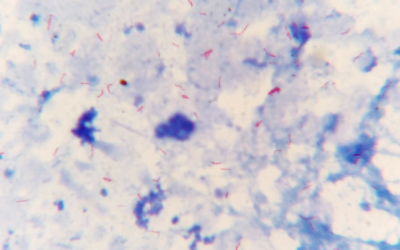
Biofilm is one of those words people use as if everyone understands it. When I first heard the word ‘biofilm’, I imagined something dramatic: some sort of sci-fi, weird, slimy coating in my lungs. What I’ve come to understand is – the reality is both simpler, and more complicated than that.
What exactly is biofilm?
Why do mycobacteria form it so easily?
Why is it such a problem?
And most importantly – What can I do about it?
What is biofilm?
Biofilm is not a single germ – it’s a community.
When bacteria settle somewhere – in soil, water pipes, showerheads, or lungs – they don’t just float around on their own. Instead, they attach to a surface and start producing a sticky protective layer. Over time, more and more bacteria join in, and together they build a kind of structured community encased in a slimy matrix – the biofilm.
I think of it like:
A neighbourhood, with protective fencing around it to defend against predators, or
A mediaeval fortress with thick walls, or
The plaque on my teeth – that’s a kind of biofilm too.
Inside the protective layer they build, bacteria work together. They communicate, share food, and most importantly, become much harder to kill.
Why do Mycobacteria form biofilm so easily?
Non-tuberculous mycobacteria (NTM), are particularly skilled at surviving in tough environments.
Unlike many other bacteria, mycobacteria have:
Thick, waxy cell walls,
A natural resistance to disinfectants,
The ability to survive in low-nutrient, water environments.
These things make mycobacteria very comfortable living in our water systems – our household plumbing, showerheads, hot water cylinders, indoor swimming pools. And in our soil.
Bacteria don’t form biofilm because of something we’re doing. They’ve evolved to attach to surfaces, work together and form biofilms as a survival strategy.
Unfortunately, when we breathe in water droplets from the air, these same survival skills can make them harder to treat after they’ve made a home in our lungs.
Why is biofilm a problem in NTM lung disease?
Here’s the issue: Antibiotics really struggle to penetrate past biofilm.
The sticky matrix is a physical shield for the bacteria inside, plus:
NTM bacteria grow more slowly than many other types of bacteria – and slow-growing bacteria are less affected by many antibiotics.
NTM bacteria can hibernate – remaining dormant for a period of time.
NTM bacteria can share survival signals.
These are some of the reasons NTM treatment needs:
Multiple antibiotics,
Long courses (sometimes up to 24 months), and
Careful monitoring.
It’s less that the antibiotics don’t work – it’s more that the bacteria are very good at protecting themselves.
Biofilm is possibly a good part of the reason I got a second, then a third relapse – even after treatment, and why I need to do daily airway clearance.
What can WE do about it?
That’s the part that matters most to me. While we can’t magically dissolve biofilm overnight, there are practical steps we can take to reduce its impact, and help our treatment regimen to work.
Airway Clearance
Airway clearance is not an optional extra – it’s a key part of managing this lung disease. It’s so important that if you don’t do it, or don’t understand it – please ask. We often talk about airway clearance at our monthly catchups. There are various methods, and it’s important to find the one that works for you.
Regular airway clearance helps to physically remove mucus – and every little bit of mucus you get out contains some of that bacteria, embedded in its biofilm.
Consistent, long-term, monitored antibiotic treatment
There are internationally accepted guidelines for your doctor to follow when treating NTM. It will usually mean multiple drugs, working together to:
Attack the bacteria in different ways,
Reduce the ability of the bacteria to develop resistance, and
Gradually break down bacterial populations.
Treatment works slowly. It can be hard. Our job is to make the most of the treatment, and focus on the end-goal.
Reducing our exposure to NTM bacteria
There is a lot of information out there about reducing our exposure to NTM bacteria. They thrive in water, they thrive in soil – so they’re all around us. The most helpful and comprehensive advice on reducing exposure I have found is from retired Professor Joe Falkinham. All the advice out there can get quite overwhelming – and he is an advocate for us to just do what we can – balance is important. We still need to live and enjoy life.
These are some of the things I do to reduce my exposure to NTM bacteria:
Each month, I remove my shower head and thoroughly clean it.
I don’t swim in an indoor heated pool any more – but I do go to watch my grandchildren compete, and cheer them on.
I have a filter for my drinking water – the pore size is 0.2 microns, and therefore filters out NTM bacteria.
I also have a UV sterilising drink bottle, which keeps my hot water hot and clean.
I wear a mask when gardening, use gloves and wash my hands well. I get someone else to turn soil.
I use a baby bottle steriliser for my nebuliser and other equipment.
This is not about being fearful.
Each time I get another NTM infection, the damage to my lungs gets worse, and it gets harder to fight. So, it’s about doing something positive, while keeping some balance in my life, and still doing the things that make me happy.
Keeping healthy
Good nutrition, exercise (whatever that means for you), maintaining a good weight, managing reflux and keeping away from things that irritate the lungs are all important strategies for us.
Knowing how strong biofilm is doesn’t mean giving up the fight.
For me, it means understanding why I need to do the things I do daily. It means understanding the long course of treatment when my body protests that we’re sinking the ship just to get rid of the rats. It gives my daily airway clearance routine significance. It helps me remember to wear a mask, filter my drinking water.
These things are not overkill. NTM bacteria may be skilled warriors, but I am a fighter.
It’s all about strategy. And when you understand the strategy, the daily effort makes sense.
One step at a time.
Arohanui
Mary